And yet: Occupation as a Challenge to Peace
Is occupation good or bad? The answer must be rational. If it is good, it must be good for everyone; if it is bad, it must be bad for everyone. The answer cannot be paradoxical. The answer, in one word, is that occupation is bad. If occupation is bad, why is it sometimes praised as a heroic act and, in other cases, condemned? Does occupation have two different definitions that we somehow failed to notice?
Occupation occurs through military invasion, aggression, and the violation of another country’s sovereignty. If occupation is wrong, then it is wrong regardless of who commits it or in which era it occurs. It cannot be justified when Afghan kings and rulers invaded other lands, including India, yet condemned only when others invaded Afghanistan.
Until three centuries ago, Afghan kings and rulers themselves were aggressors and invaders of others’ territories. After that, however, the roles reversed: we became the victims, and others the aggressors.
Treating People Like a Colony
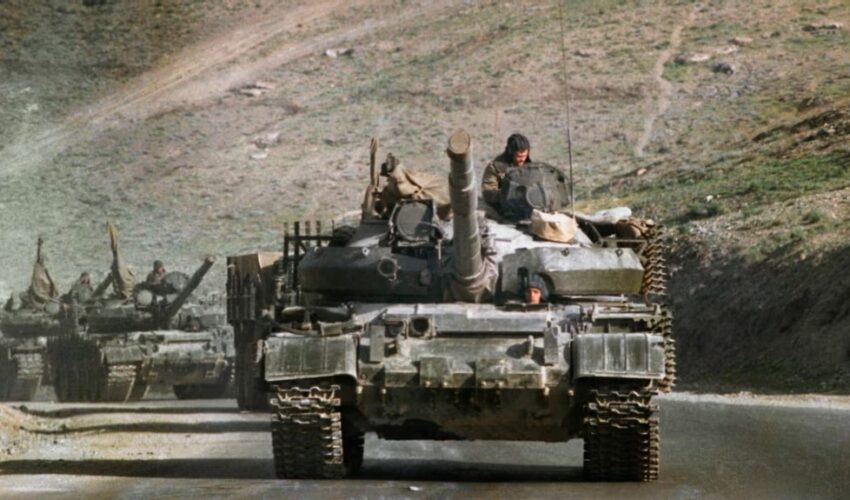
Everyone speaks and writes about occupation as if no other occupations ever occurred and as if they themselves played no role in any of them. December 27, 1979 (6 Jaddi 1358) is a clear example of this selective memory. Every year, this day is criticized and its actors are labeled national traitors—as if the critics themselves were saviors of this land and had no share in crimes, destruction, or betrayal.
December 27, 1979 and August 15, 2021 (24 Asad 1400) represent two forms of occupation in Afghanistan over the past half-century. The Taliban treat the population as people of a conquered colony. Yet they, too, describe December 27, 1979 as an occupation. The April 27, 1978 revolution (7 Sawr 1357) entered its second phase on that day—or, more precisely, its third phase if we consider the ‘white coup’ of July 17, 1973 (26 Saratan 1352) as the beginning of the People’s Democratic Revolution and the end of the monarchy.
A Non-Partisan Perspective
If we adopt a neutral view of at least the past century of Afghanistan’s history, we must acknowledge that—as agents of action (whether through jihad, migration, or affiliation with communist or Islamist parties)—we all bear responsibility and share blame for the current catastrophe, unless we insist that we were merely passive objects of history. Were we truly only passive victims, with no role in shaping this trajectory?
This is not an easy question. An honest answer requires critically examining our own actions.
The Khalq and Parcham communist parties, the seven and eight Islamist mujahideen factions, and the Taliban all committed crimes. All of them opened Afghanistan’s doors to foreign powers. Members of all ethnic groups participated in these parties. At the same time, many people from all ethnic communities remained politically unaffiliated and neutral.
These groups and parties played decisive roles in creating the present situation. Therefore, blaming one ethnic group while absolving another is illogical and makes any path toward peace impossible.
The Consequences of the Red-Flagged Invasion
What happened on that day, and what were its consequences? December 27, 1979 is also regarded as the end of the third presidential phase. The republic that began with Mohammad Daoud Khan on July 17, 1973, continued with Nur Mohammad Taraki after April 27, 1978, and entered a new and highly tense phase following the killing of Hafizullah Amin on December 27, 1979.
Thus, although the republic marked the end of monarchy, it was flawed from the outset. It was a republic without elections, differing little from dictatorship, monarchy, or royal rule.
Nevertheless, there was still an opportunity to make use of the republican framework and prevent the squandering of that moment—before the country descended into the Islamic State of the Mujahideen, the first Taliban Emirate, the Islamic Republic, and then the second Taliban Emirate, culminating in today’s tragic reality.
December 27, 1979 also marked the end of a dictator accused of being a “black agent.” Much can be written about this period using existing sources and further research. Yet even after 46 years (as of 2025), many aspects of this day remain unexplored, unwritten, and unexamined.
Despite all this, it was during the People’s Democratic Republic that state-led literacy campaigns were introduced in cities and villages—sometimes compulsorily—and free education for all, without gender discrimination, was provided nationwide.
Under the Islamic Emirate, everything was reversed. The national was reduced to the ethnic and tribal. Girls were barred from education; women were excluded from work and erased from public life.
This leads to a critical question: if December 27, 1979 —with compulsory literacy and free education for both men and women—was an occupation, then what is August 15, 2021, with the exclusion of women and girls from education and society? This is a terrifying form of occupation: the enslavement of an entire population in the twenty-first century, in the third millennium.
Judgmental conclusions and blind, partisan biases will not resolve Afghanistan’s crisis. Communists, Mujahideen, and the Taliban are all products of the same mindset: absolving oneself and condemning others. And this, above all else, is what makes peace impossible.